
A customer hasn't paid. The three messages to send, and when
9 November 2026 · 3 min read · Andrew Murray, Flowrate
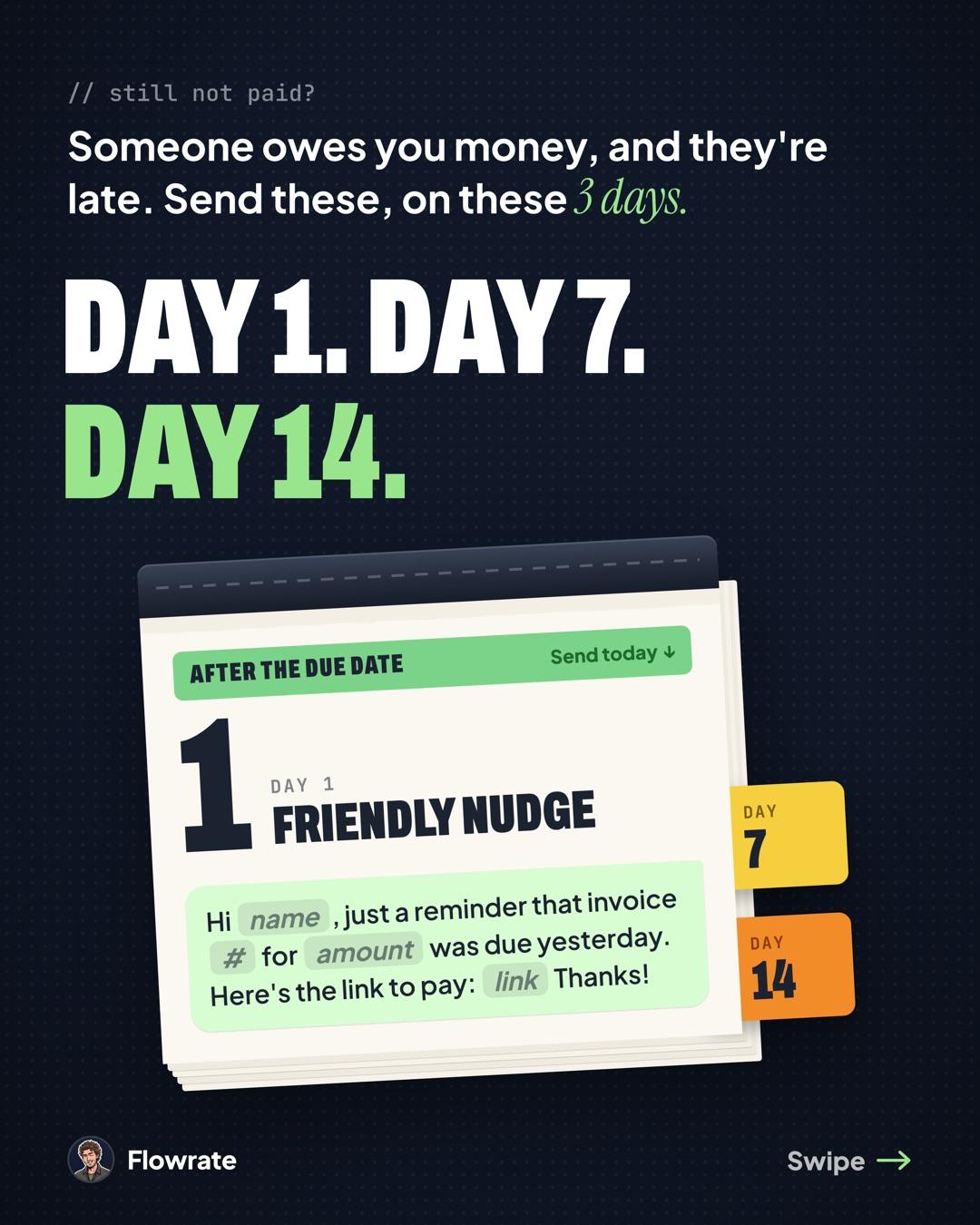
An invoice is past its due date and the money hasn't come in. Most owners do one of two things: they say nothing and hope, or they wait until they're annoyed and send something sharp. Neither gets you paid faster. What works better is boring: three short messages, sent on set days, each one a little firmer than the last.
Why a set plan beats chasing when you remember
Late payers are usually not villains. Often the invoice got buried, or the person who pays the bills never saw it. A calm message on a fixed day fixes most of those. The plan also takes the feeling out of it for you: you're not deciding whether it's rude to ask, you're just sending day 7's message because it's day 7.
Day 1: a friendly nudge
The day after it was due. Keep it light and make paying easy: the invoice number, the amount, and the link or bank details right there in the message, so they can pay in the time it takes to read it.
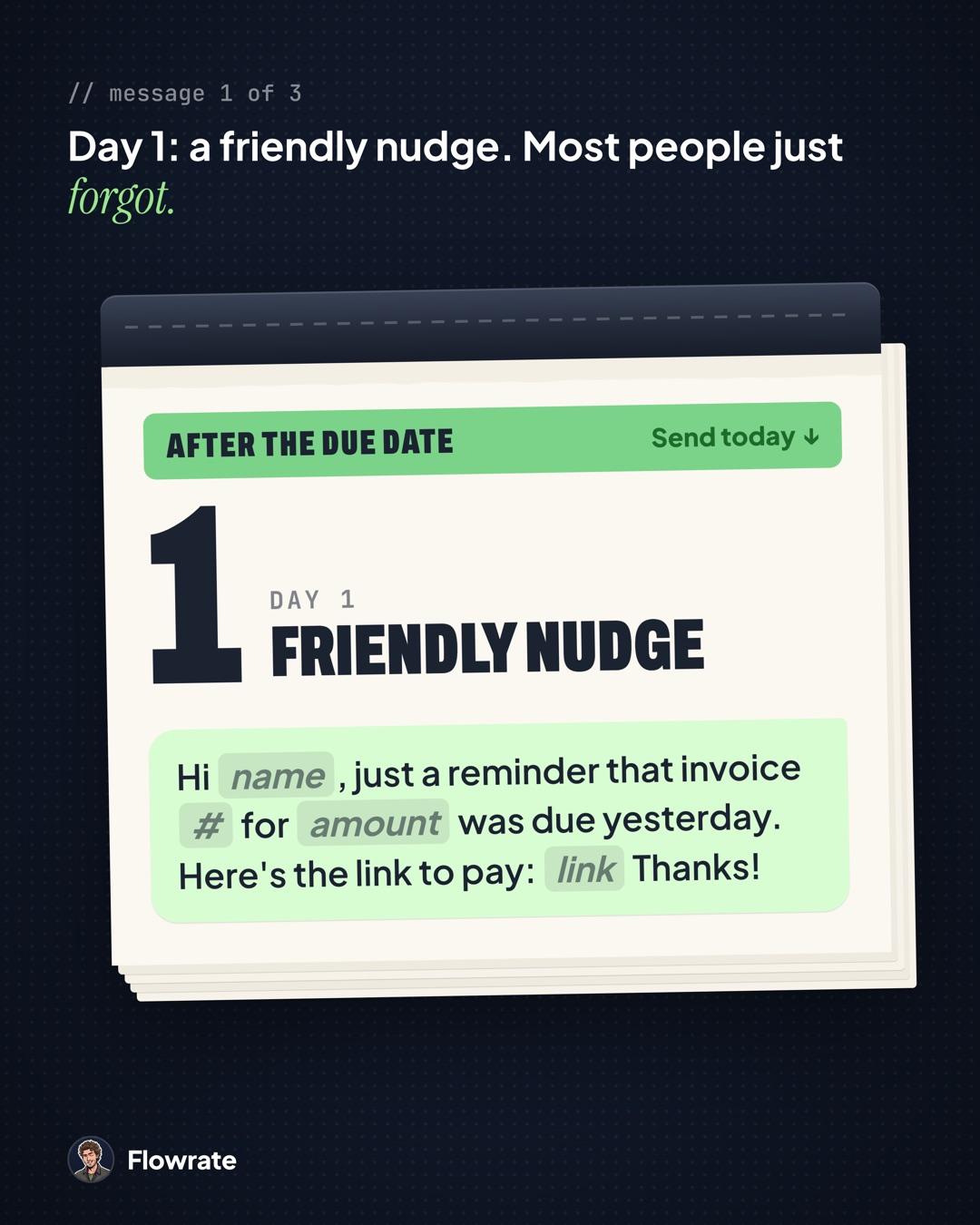
- Say "Hi [name], just a reminder that invoice [#] for [amount] was due yesterday. Here's the link to pay: [link]. Thanks!"
- Don't apologise for asking, or leave out the amount and make them go and look it up.
Day 7: ask for one clear date
A week late, the question changes from "did you see it?" to "when?". Ask for a specific day. A vague "soon" is easy to forget; a date they chose is one they tend to keep.
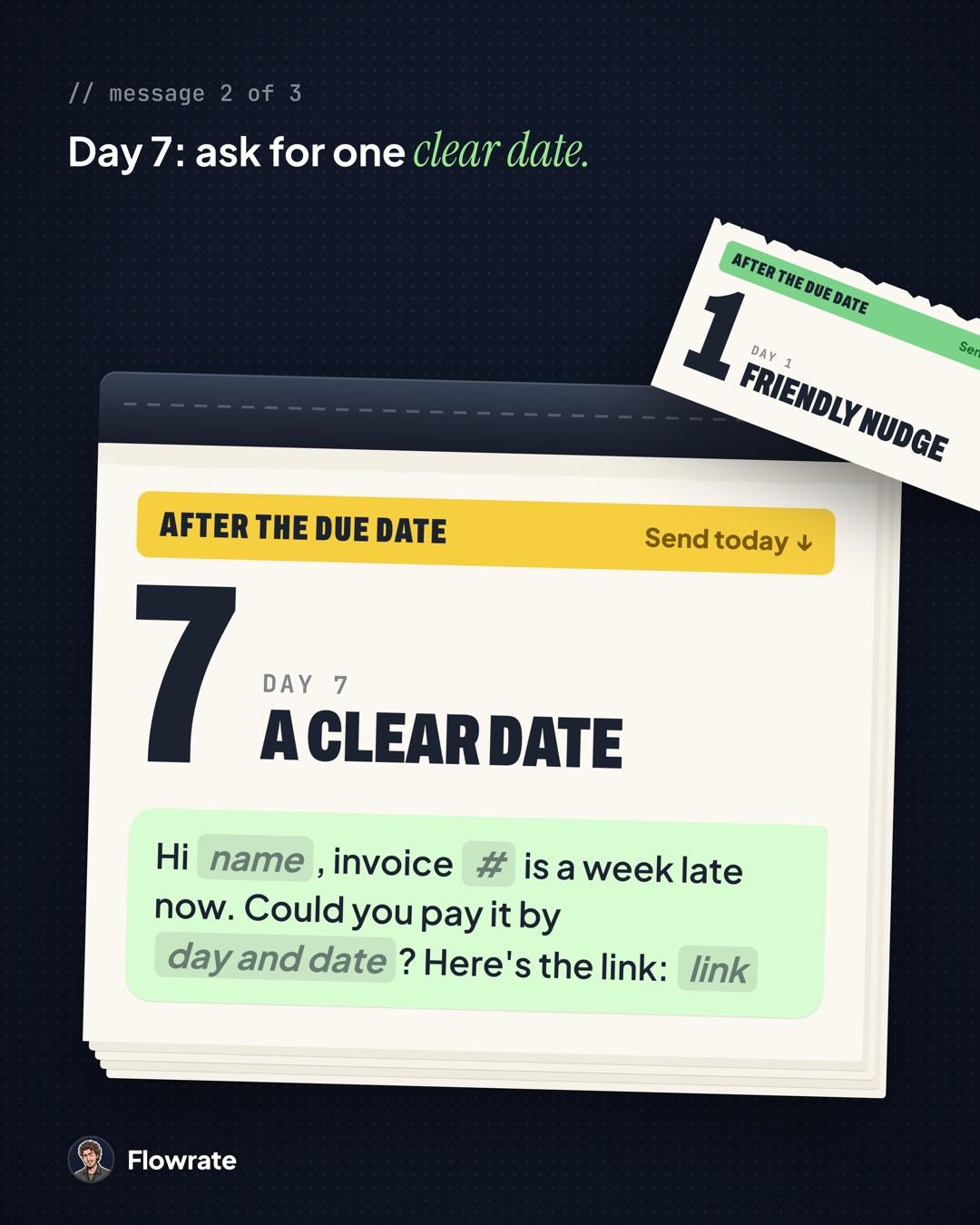
- Say "Hi [name], invoice [#] is a week late now. Could you pay it by [day and date]? Here's the link: [link]."
- Then write the date they give you down somewhere you'll actually see it, and check on that day.
Day 14: firm, but kind
Two weeks late, say what happens next, and offer a way out. Pausing new work until it's paid is fair and easy to explain. Offering to split the amount into two payments often unsticks a customer who wants to pay but can't do it all at once.
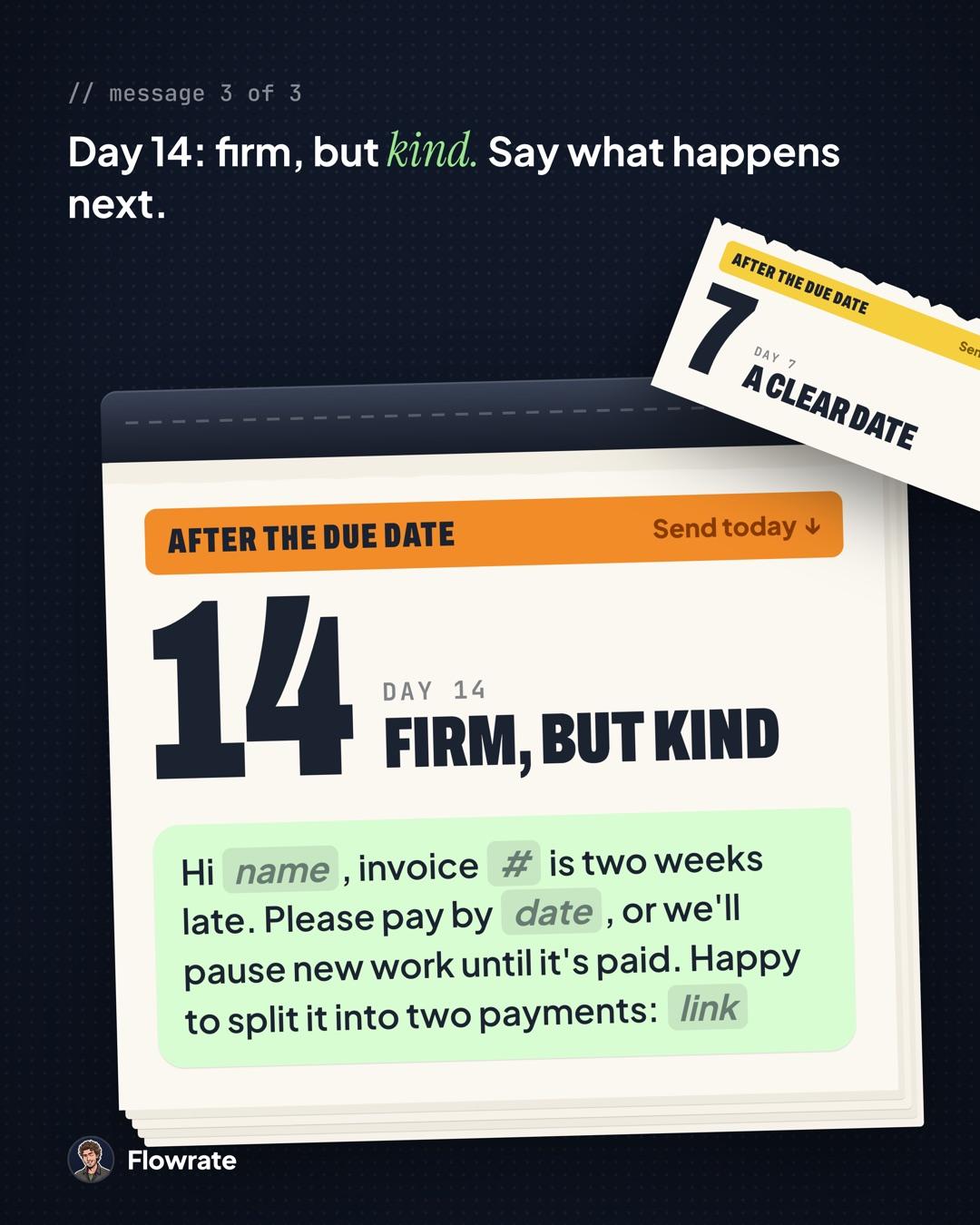
- Say "Hi [name], invoice [#] is two weeks late. Please pay by [date], or we'll pause new work until it's paid. Happy to split it into two payments: [link]."
- Only promise what you'll really do. If you won't pause the work, don't say you will.
Get all three messages on one printable page →
A few things that make every message work better
- Send it where they read If they answer WhatsApp and ignore email, send it on WhatsApp.
- Always include the link or bank details Every extra step between reading and paying is a reason to do it later.
- Keep a note of what you sent So you know which message is next, and nobody in your team sends the same one twice.
- Agree the terms before the job A due date that was agreed upfront is much easier to hold someone to.
When chasing becomes a job in itself
Three messages are easy to send for one invoice. With twenty open invoices, remembering who's on day 1 and who's on day 14 becomes somebody's whole Friday. That's the point where a system can do it for you: it knows each invoice's due date, sends the right message on the right day in your words, and stops as soon as the payment lands.
That's the kind of thing we build at Flowrate: custom software shaped around how your business already works, so the chasing happens on time without anyone having to remember it.
See a job app where the invoice is ready the moment the job is done →
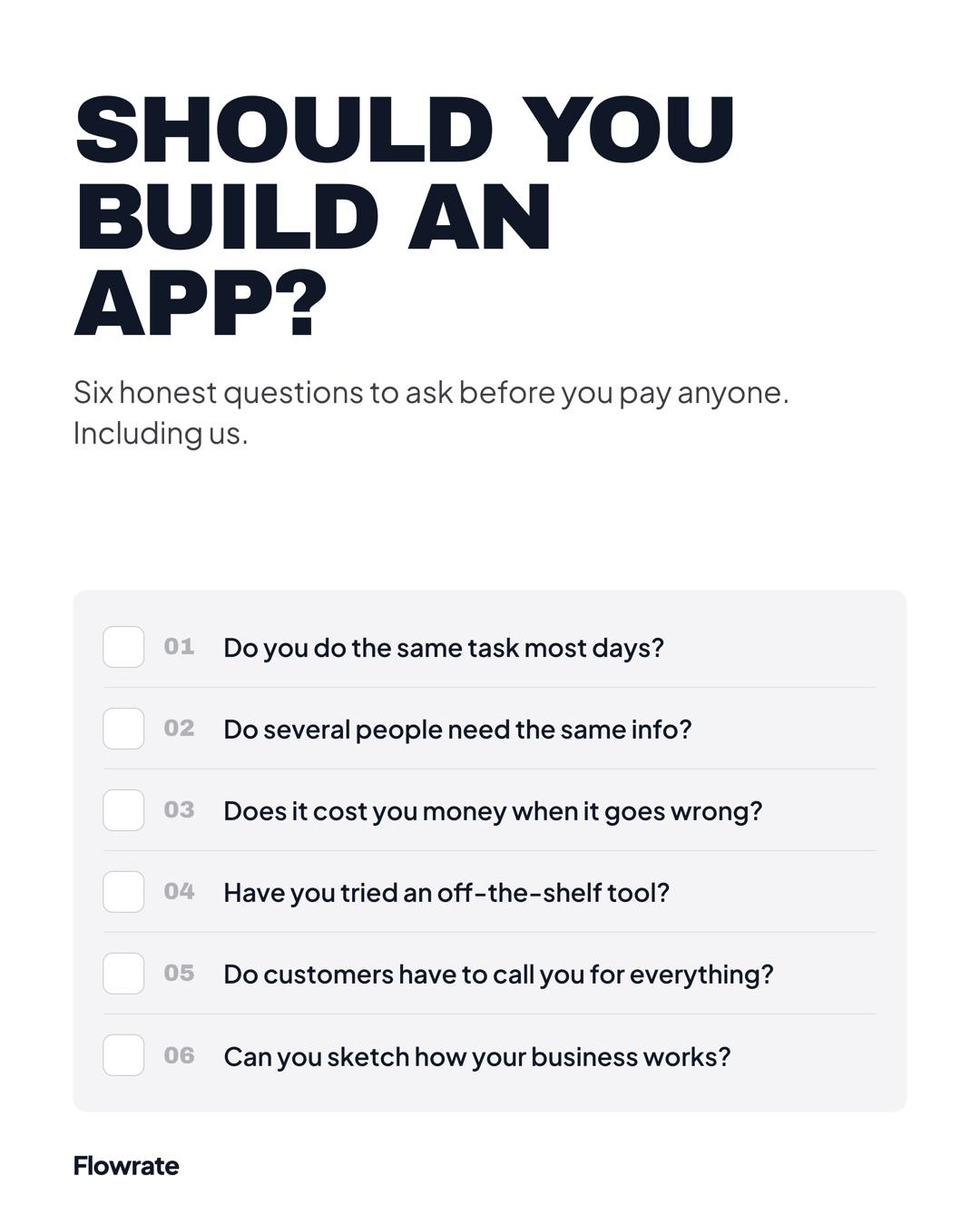 Read next · 2 minDo you need a custom app for your business? Six honest questions
Want this sorted for your business?
Flowrate builds custom apps, dashboards, portals and websites around how you already work. Tell us how your work runs on a free call.
Book a free callWho we build for: trades & field service, transport & logistics, farms & agriculture, salons & studios, manufacturing & workshops.